Can restriction enzymes cut supercoiled DNA?
Many restriction enzymes interact with two copies of their recognition sequence before cutting DNA and most of these act on both supercoiled and relaxed DNA (6). They also include many Type II enzymes that cleave DNA at fixed locations at or near their target sites.
What do Type 2 restriction enzymes Recognise?
More than 3000 type II restriction endonucleases have been discovered. They recognize short, usually palindromic, sequences of 4–8 bp and, in the presence of Mg2+, cleave the DNA within or in close proximity to the recognition sequence. The orthodox type II enzymes are homodimers which recognize palindromic sites.
Do restriction enzymes recognize genes?
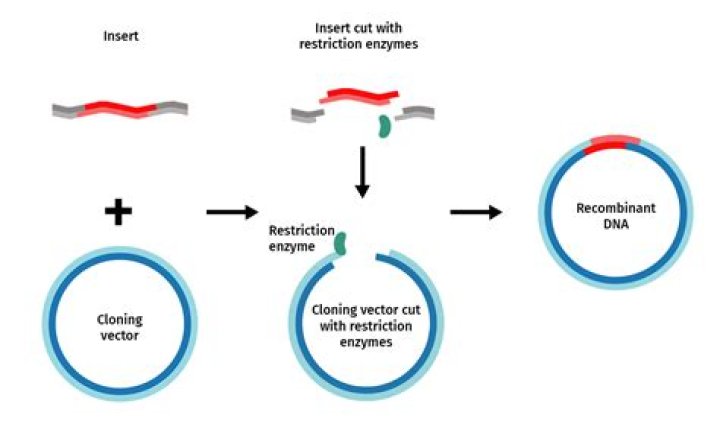
Restriction enzymes, also called restriction endonucleases, recognize a specific sequence of nucleotides in double stranded DNA and cut the DNA at a specific location. They are indispensable to the isolation of genes and the construction of cloned DNA molecules.
Why do restriction enzymes recognize palindromic sequences?
Explanation: Enzymes such as restriction enzymes have to recognize a very specific sequence in order to carry out its task. It binds to the DNA only in one specific configuration. A palindromic sequence also increases the chance that both strands of DNA are cut.
Can supercoiled DNA be digested?
If the enzyme has a low affinity for supercoiled DNA, then the relaxed form will appear to digest faster than any of the superhelical forms.
What causes Supercoiling plasmids?
Supercoiled Plasmid Supercoiled DNA is the native DNA conformation found in vivo and occurs when extra twists are introduced into the double helix strand. People often compare the forms of DNA to rubber bands or telephone cords (I know some of you must still remember phones with cords!).
What is the recognition site of restriction enzyme?
Restriction sites, or restriction recognition sites, are located on a DNA molecule containing specific (4-8 base pairs in length) sequences of nucleotides, which are recognized by restriction enzymes.
Which DNA sequence would most likely be recognized by a restriction enzyme?
palindromic sequence
A recognition sequence of a restriction endonuclease must be a palindromic sequence. The palindromic arrangement represents the same nucleotide from the 5′- 3′ end of one strand with the 3′-5′ end of the opposite DNA strand. Therefore, the correct options are (A) and (D).