Do hard hats have to be CSA approved?
If the risks we described in the previous section do not exist, then it is probably not necessary to use a hard hat. Wearing a rigid plastic bump cap, aerated or not, with or without suspension, can very well do the trick. Be careful, however; these caps are not CSA approved.
What class is a vented hard hat?
Class C
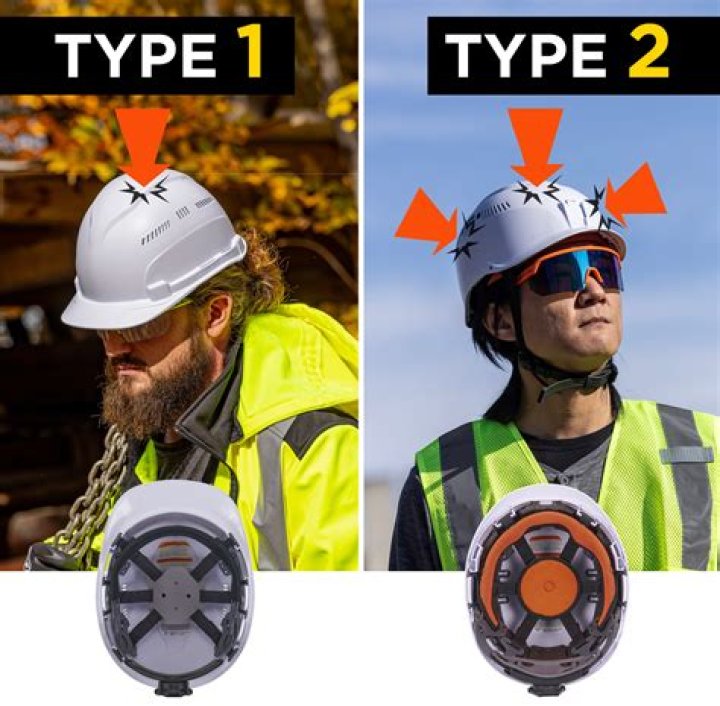
Vented Front Brim Hard Hats (Type 1, Class C) Vented front-brim (Type 1, Class C) hard hats are vented to help dissipate heat and have a front brim to protect the face from sun, reduce glare, and help shed rain. Type 1 hard hats protect wearers from vertical impacts.
Can Class E hard hats be vented?
CLASS E: Class E hard hats are designed to reduce exposure to high voltage conductors and offer protection up to 20,000 volts. These helmets cannot be vented.
What type of hard hat is not approved by ANSI?
Bump caps are not ANSI approved; therefore, they are not OSHA approved. Bump caps do not protect against falling objects. They are never appropriate for workplaces that require hard hat protection.
What is the CSA standard for hard hats?
CSA Z94.1
Since the last revisions in 2016, the standard CSA Z94. 1 ensures that all workers using head protection equipment are always compliant and use gear adapted to their work environment. Our experts answer your most frequent questions about safety and construction hard hats as well as welding helmets.
How do I know if my hard hat is CSA approved?
The “Type” and “Class” of hard hat can be identified by the CSA or ANSI label. Some manufacturers also stamp the CSA or ANSI classification into the shell of the hard hat under the brim (Figure 12-1).
What does HV mean on a hard hat?
High visibility
Helmets marked with “HT” indicate that the hard hat meets protective requirements when exposed to temperatures up to 140°F. HV – High visibility – Hard hats marked with an “HV” indicate that the hard hat meets the requirements of the standard for high visibility colors.
What protection do hard hats offer?
Class E (Electrical) Hard Hats are designed to reduce exposure to high voltage conductors, and offer dielectric protection up to 20,000 volts (phase to ground). This amount of voltage protection, however, is designated to the head only, and is not an indication of voltage protection allocated to the user as a whole.
How do I know if my Canadian hard hat is expired?
To check the expiry date, you first need to find out when the hard hat was manufactured. It’s this manufactured date that will be stamped onto the hard hat, usually below the brim, simply flip your hard hat over and take a look on the inside.