How do you find cross-sectional volume?
To calculate the volume of a cylinder, then, we simply multiply the area of the cross-section by the height of the cylinder: V=A⋅h. In the case of a right circular cylinder (soup can), this becomes V=πr2h. Figure 1.1. 1: Each cross-section of a particular cylinder is identical to the others.
What is the relationship between cross-sectional area and diameter?
The cross-sectional area of a wire is directly proportional to the square of its radius (A = πr2), and hence to the diameter of the wire as well. Therefore, if we increase the diameter of the wire two times, its cross-sectional area will increase four times.
How do you find the area of a cross?
The area of the cross can be calculated as follows: Area(horizontal bar) + Area(vertical bar) – Area(intersection between the horizontal bar and the vertical bar).
What is volume of wire?
Volume of wire, V=πr2l.
How is cross-sectional and resistance related?
Resistance is inversely proportional to cross-sectional-area. The bigger the cross sectional area of the wire the greater the number of electrons that experience the ‘electric slope’ from the potenetial difference.
Is area the same as cross-sectional area?
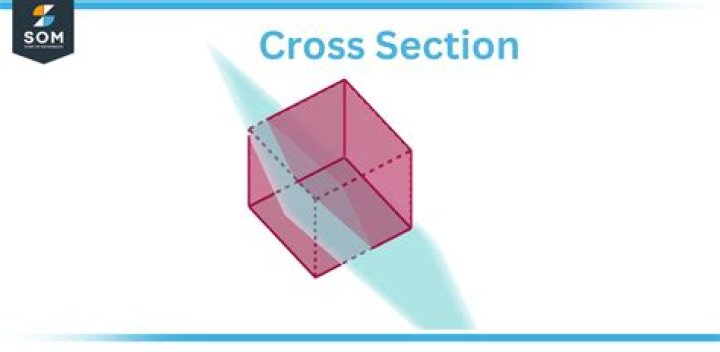
The cross-sectional area of a cylinder is equal to the area of a circle if cut parallel to the circular base. The cross-sectional area is the area of a two-dimensional shape that is obtained when a three-dimensional object – such as a cylinder – is sliced perpendicular to some specified axis at a point.
Is cross-sectional area the same as area?
What is cross-section area?
The cross-sectional area is the area of a two-dimensional shape that is obtained when a three-dimensional object – such as a cylinder – is sliced perpendicular to some specified axis at a point. For example, the cross-section of a cylinder – when sliced parallel to its base – is a circle.