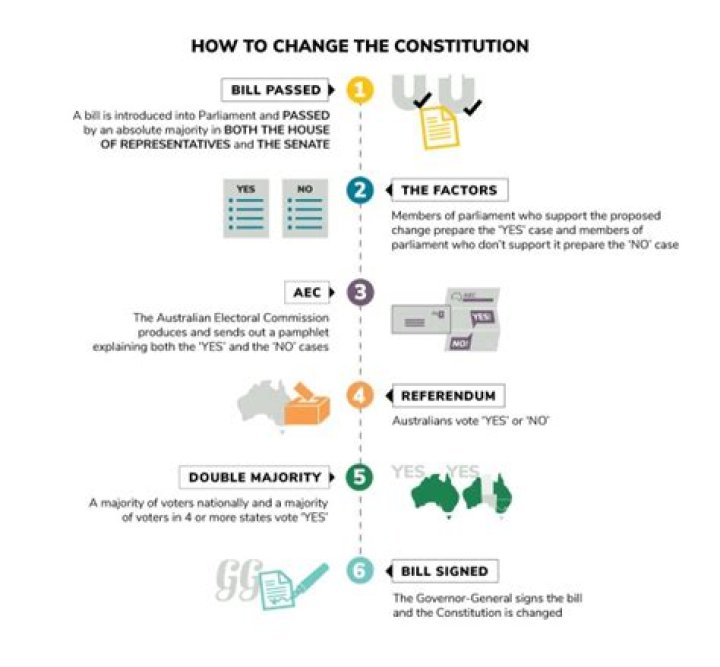
How is a referendum passed in Australia?
A referendum is only passed if it is approved by a majority of voters across the nation and a majority of voters in a majority of states—this is known as a double majority. Territory voters are only counted in the national majority. If a referendum is successful, the change is made to the Constitution.
What is the difference between a referendum and a plebiscite?
Referenda are binding on the government. A plebiscite is sometimes called an ‘advisory referendum’ because the government does not have to act upon its decision. Plebiscites do not deal with Constitutional questions but issues on which the government seeks approval to act, or not act.
Why do we have referendums?
Referendums have been held in Australia to approve parliament-proposed changes to the Constitution of Australia or to the constitutions of states and territories. Voting in a referendum is compulsory for those on the electoral roll, in the same way that it is compulsory to vote in a general election.
When was the last Australian referendum?
The Australian republic referendum held on 6 November 1999 was a two-question referendum to amend the Constitution of Australia….1999 Australian republic referendum.
| Response | Votes | % |
|---|---|---|
| Valid votes | 11,683,811 | 99.14% |
| Invalid or blank votes | 101,189 | 0.86% |
| Total votes | 11,785,000 | 100.00% |
| Registered voters/turnout | 12,392,040 | 95.1% |
What does plebiscitary mean?
(plĕb′ĭ-sīt′, -sĭt) 1. A direct vote in which the entire electorate is invited to accept or refuse a proposal: The new constitution was ratified in a plebiscite. 2. A vote in which a population exercises the right of national self-determination.
What is the significance of plebiscite?
A plebiscite or referendum is a type of voting, or of proposing laws. Some definitions of ‘plebiscite’ suggest that it is a type of vote to change the constitution or government of a country.
Is Quebec still part of Canada?
listen)) is one of the thirteen provinces and territories of Canada. Quebec is the largest province by area and the second-largest by population. Much of the population lives in urban areas along the St. Lawrence River, between the most populous city, Montreal, and the provincial capital, Quebec City.
Who can call a referendum?
Six local voters may call a meeting, and if ten voters or a third of the meeting (whichever is smaller) agree, the council must carry out a referendum in 14–25 days. The referendum is merely advisory, but if there is a substantial majority and the results are well-publicised, it may be influential.
Is referendum a political reform?
Initiatives and referendums, along with recall elections and popular primary elections, are signature reforms of the Progressive Era; they are written into several state constitutions, particularly in the West. It is a form of direct democracy.