How was Yolanda typhoon formed?
On November 1, 2013, a low pressure area was spotted over the Caroline Islands in Kiribati. It moved westward and intensified into a tropical depression on November 3. It became a tropical storm and earned the international name “Haiyan” on November 4 and eventually escalated into a typhoon category on November 5.
Why typhoon Yolanda is so strong?
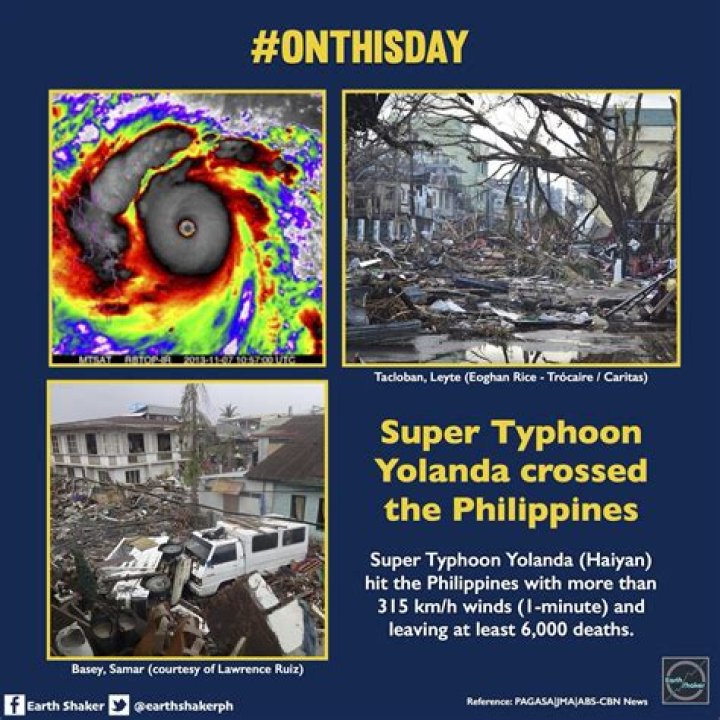
Haiyan was called a super typhoon for part of its life because of it sustained winds of more than 150 mph. Wind speed, however, is not the only factor that determines the destructiveness of storms. Don’t forget about other associated hazards like storm surge, tornadoes, and flooding.
What is typhoon in science definition?
tropical cyclone, also called typhoon or hurricane, an intense circular storm that originates over warm tropical oceans and is characterized by low atmospheric pressure, high winds, and heavy rain. Hurricane structure and rotation pattern.
What body of water did typhoon Yolanda originated?
South China Sea
Haiyan, with its core disrupted by land interaction with the Philippines, emerged over the South China Sea late on November 8.
What are the harms of hazards of Typhoon Yolanda?
More than 6000 people died, 1785 were reported missing and 28,626 were injured (National Operational Assessment of Hazards, n.d.). The total number of people affected by Typhoon Yolanda, in relation to their livelihood, environmental and food security, was approximately 16 million.
How typhoons develop explanation?
A typhoon forms when winds blow into areas of the ocean where the water is warm. These winds collect moisture and rise, while colder air moves in below. This creates pressure, which causes the winds to move very quickly. In order for a storm to be a typhoon, wind speeds have to reach at least 74 miles per hour.
What is the effect of typhoon Yolanda in our economy?
The long-term risks of Typhoon Yolanda include a rise in unemployment and underemployment, increased poverty levels, and deteriorations in human capital indicators. An additional 1 million people could have been pushed into poverty.
What are the effects of typhoon in the environment?
The storms may damage or destroy trees and other vegetation, including crops that communities may rely on for sustenance or trade, or both. Strong winds can snap branches; detach and injure leaves, flowers, fruits and seeds; and uproot trees and plants.