What does the Hodson assessment of phonological patterns measure?
Examiner’s Manual. 25 Comprehensive Phonological Evaluation Record Forms. 25 Major Phonological Deviations Analysis Forms. 25 Substitutions and Other Strategies Analysis Forms.
What is the happ3?
The HAPP-3 is designed to identify deviant phonological patterns in children with highly unintelligible speech, 2 years of age and older.
Is the Hcapp standardized?
Compare the TOMPD score generated in HCAPP to data provided in the HAPP-3 to determine a standard score. Client data can be stored for future retrieval. Please allow 1 to 2 weeks for delivery….HCAPP— Hodson Computerized Analysis of Phonological Patterns.
| Age Group | Pre-K, Elementary, Secondary |
|---|---|
| Platform | Windows, Mac |
| Media Type | Flash Drive |
| Downloadable | No |
| License | 1 device license |
What is the Khan Lewis?
The Khan-Lewis Phonological Analysis – 3 is a companion analysis for the Goldman-Fristoe Test of Articulation – 3. These continue to be the most widely used assessments for evaluating articulation and phonological processes.
What does the CAAP 2 assess?
The CAAP-2 assesses articulation and phonology in children. The phonological process checklists assess final consonant deletion, cluster reduction, syllable reduction, gliding, vocalization, fronting (velar and palatal), deaffrication, stopping, prevocalic voicing, and postvocalic devoicing.
What is the KLPA-3 used for?
The KLPA-3 provides an in-depth phonological process analysis for individuals of any age with speech sound disorders and should be used as well for children between the ages of 2 and 5 who are still developing their speech sound systems.
When should Vowelization be eliminated?
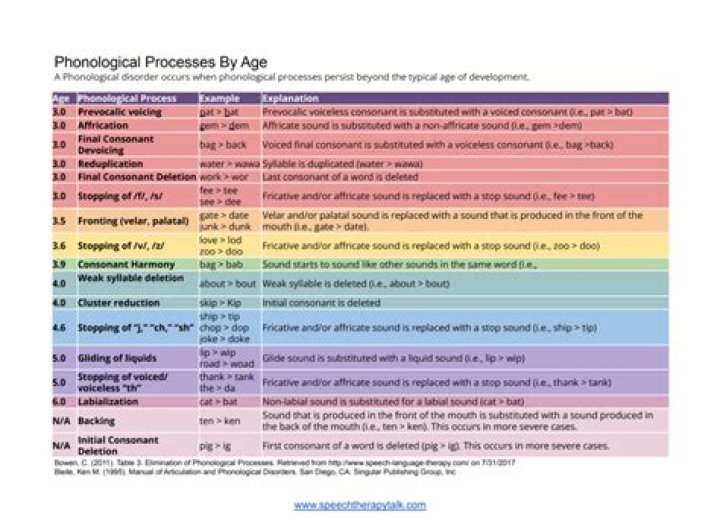
Vowelization typically resolves by the age of 6. Affrication is the substitution of an affricate (ch, j) sound for an nonaffricate sound (e.g. “choe” for “shoe”). We should no longer hear this process after the age of 3.
How intelligible should a 4 year old be?
At 8 months, a typical child is 25 percent intelligible. At 2 years, a typical child is 50 to 70 percent intelligible. At 3 years, a typical child is 80 percent intelligible. At 4 years, a typical child is 90 to 100 percent intelligible.